´
‘The color of the water changes below the Mexico border; it takes on a deep, ultramarine blue; a bleach blue, dense and seeming to penetrate the depths of the water; fishermen call it ‘tuna water’.
Steinbeck. The Log from the Sea of Cortez
In the Beginning
Raw.
Distant.
Unspoiled.
A different planet.
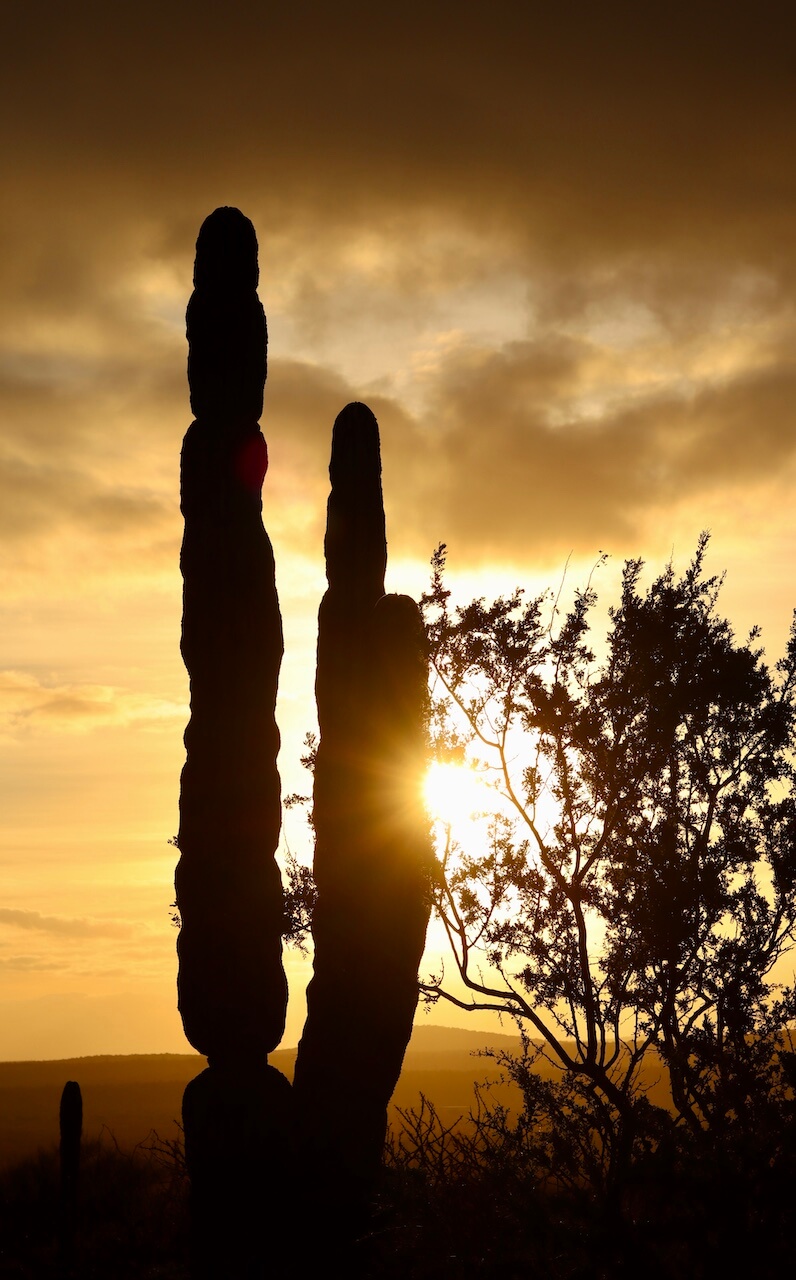
From the moment you step into Baja California Sur, there is a strange feeling to the landscape that resembles the surface of the moon.
Except for a few sleepy towns, the flow of life here is satisfyingly, incredibly slow. When you arrive, the vast emptiness of the dusty landscape makes you feel insignificant. You feel alone with the elements here. There are no fancy hotels, fast food chains, or crowded beachgoers. The reason you come here is precisely because they have not yet arrived.
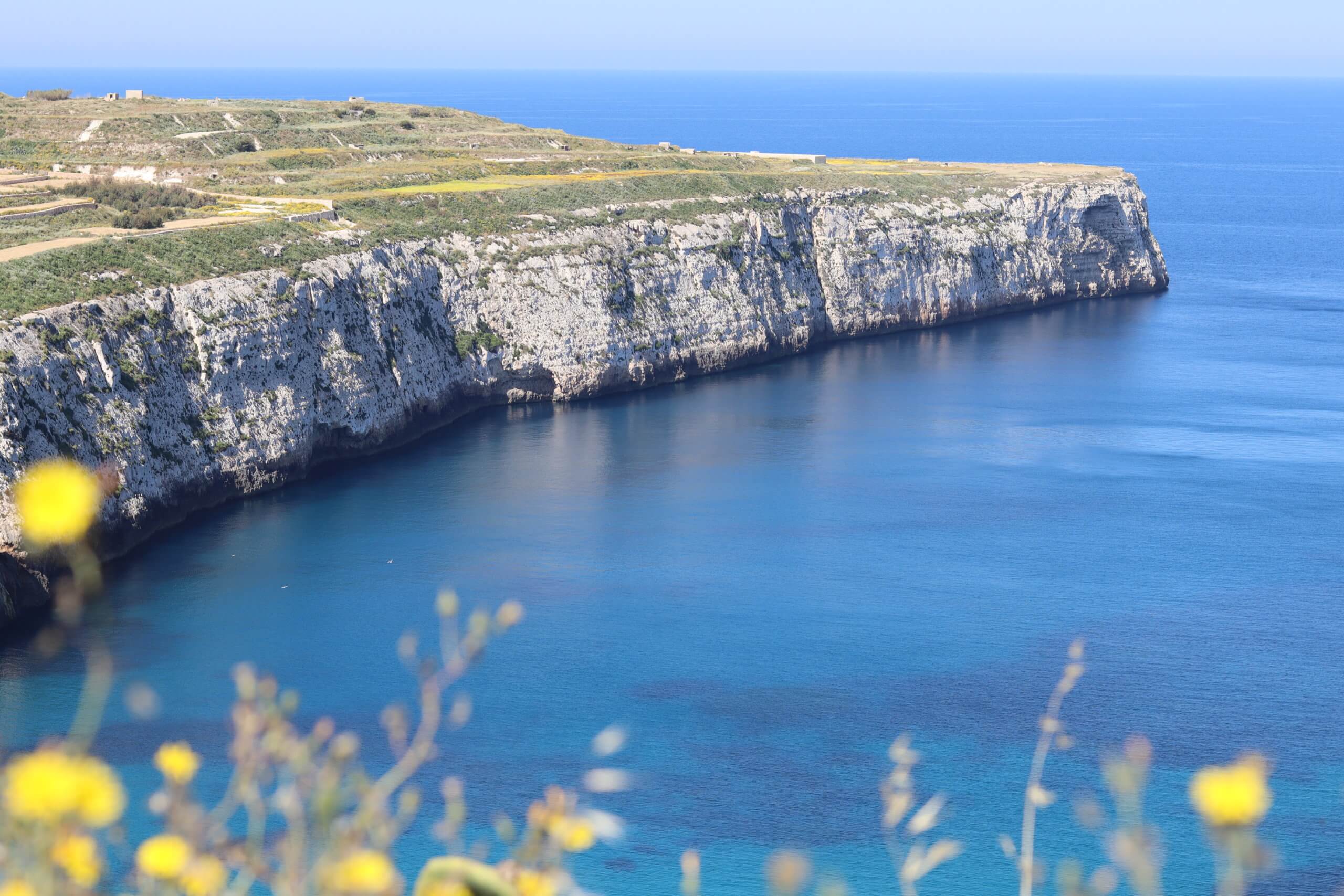
Late November is truly off-season in these areas. Still, the temperature is in the 20s, perfect late spring weather for Europe. Aside from a few winter birds and a strange dozen of caravan campers, we have the unspoiled Bahia Concepcion coast to ourselves. There are many great beaches to choose from, and we prefer El Burro, one of the most unspoiled beaches on the north side of Mulegé. The waters here, surrounded by a crescent-shaped golden beach, are crystal clear and sparkling with a blue shimmer. The water is surprisingly warm and has a calm current, perfect for novice kayakers.
After a refreshing swim, we discover Nomadico, a great café on the beach. This café, serving handmade coffee using coffee beans from roasting facilities in Cholula Puebla on the Mexican mainland, gives you the feeling of being in Brooklyn or Berlin. Later, we enjoy a local lunch consisting of ceviche and seafood tacos prepared by local fishermen on the beach. Some days in your life feel surreal, seem like a special gift from the sky, yet we know we are in an indescribable dream landscape of Baja California Sur.
Before Sunrise
Cobalt blue waves gently crash against the rocky strip they call the malecón.
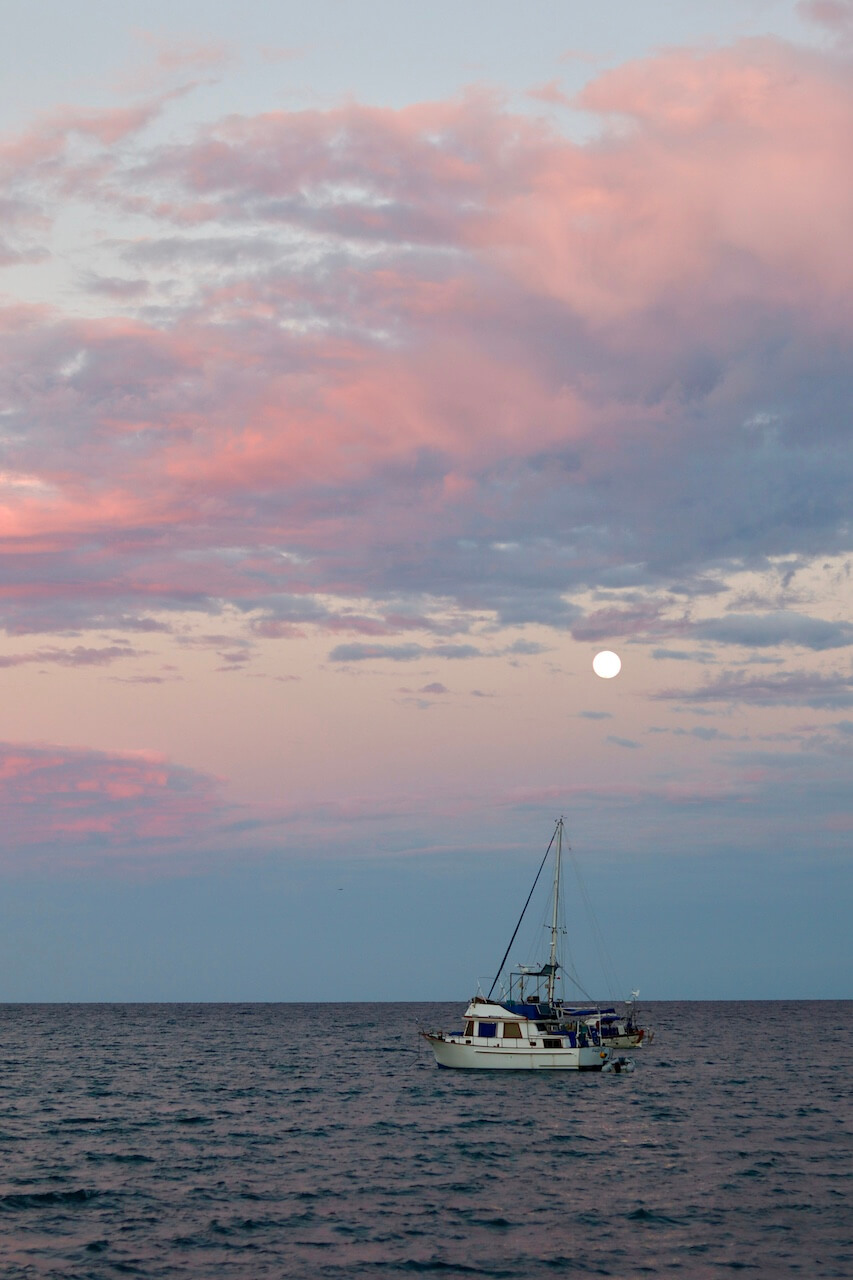
From the malecón, you can see all forms of life. In the distance, there is a lone fishing boat. The sea is calm, flat, like a shiny blue marble. In front of the stunning view of the mountainous, rugged Isla Carmen, the boat looks surreal. Like a perfect oil painting you never thought could exist in real life. Just above the malecón, there is a small harbor with an impressive whitewashed lighthouse. Usually, the marina is filled with fishing and tour boats heading out to sea, but this time it was quiet.
I, am in the sleepy Pueblo Mágico town of Loreto. Loreto marks the northern border of Baja California Sur, and you feel like you are in a town where time has lost its way. While enjoying a wonderful buffet breakfast at Hotel Oasis, my eyes drift to the horizon, watching a solitary beach dog wander along the wide black sand beach embracing the Sea of Cortez. On the other side of the town, as you walk through the streets, you can feel the watchful gaze of the impressive Sierra de la Giganta in the distance.
One of the main reasons I came to Loreto was to explore the Loreto Bay National Marine Park, home to over 800 species of marine life. Many sea creatures live here, from blue whales to Humboldt squid and sea lions. It is still too early for whale watching season in November, so I stop by the small fishing community of San Bruno. Our destination – Playa Los Arquitos, located on the deserted San Marcos Island, which hosts the second largest gypsum mine in the world.
Setting Sail
That morning, it was hard to distinguish between the sky and the sea. Both were painted in that magnificent tuna blue that Steinbeck mentioned. The sun was a big yellow ball of happiness slowly beginning to burn through the tuna blue. I hesitated to jump on a boat that morning, but the weather was so beautiful that the voice inside me urged me to overcome my fears, put on my life jacket, and jump on the boat. I was expecting a larger boat, but when we arrived at the harbor, this small fishing boat with a 50 hp engine greeted me. I was tense, but the Sea of Cortez looked deceptively calm from the shore. As we left the harbor, my stomach turned when the sound of the noisy chorus of pelicans, seagulls, and albatrosses faded away, and the boat began to crash violently against the large waves. As someone who cannot swim, you can imagine the fear that envelops you when you are surrounded by the endless blue waters of the sea and a boat defying gravity. I felt like I had turned tuna blue, and everyone could see the fear in my eyes. Our driver Rafa, in front of me, calmly placed his hand on my shoulder, suggesting that I change my position and look sideways at the horizon. I felt a bit better and focused my eyes on the vast blue ocean. We were alone, a dot in this vast beautiful ocean, and then I saw the unusual rippling peaks of San Marcos Island in the distance.
We spent the morning swimming in the sheltered cove of Playa Los Arquitos, exploring extraordinary rock formations and caves; a legacy of Baja's volcanic roots. Some members of the group went fishing with the boat owner, Daniel. After working in the mines on the island for 30 years, Daniel retired 5 years ago and runs fishing tours as well as the very popular Palapa la Abuela restaurant. They return with plenty of catch, including barracuda, yellowfin tuna, and marlin. Daniel prepares a tuna ceviche tostada as an appetizer. I think I have eaten ceviche almost every day during our trip in Baja California Sur. For the main course, we have grilled marlin with rice and salad. It is so fresh and delicious, served with extra slices of avocado, lime wedges, and cilantro, along with 3-4 types of hot sauce for extra heat. That combination of lime, avocado, pepper, and hot sauce must be one of life's great pleasures.
Appetizer
‘We do not have the attractions of a big city. We live in small towns, rancheros. The only thing we have is this unspoiled rural beauty. You can see thermal geysers. You can see cave paintings and fossils. It is very quiet here. We built these cabins for tourists and locals to enjoy this volcanic landscape. Go for a walk. Also, you are coming here for the people. There is a natural warmth in welcoming people in Baja California Sur that has existed for centuries.’
Oscar Castañeda, Eco Tour Las Tres Virgenes
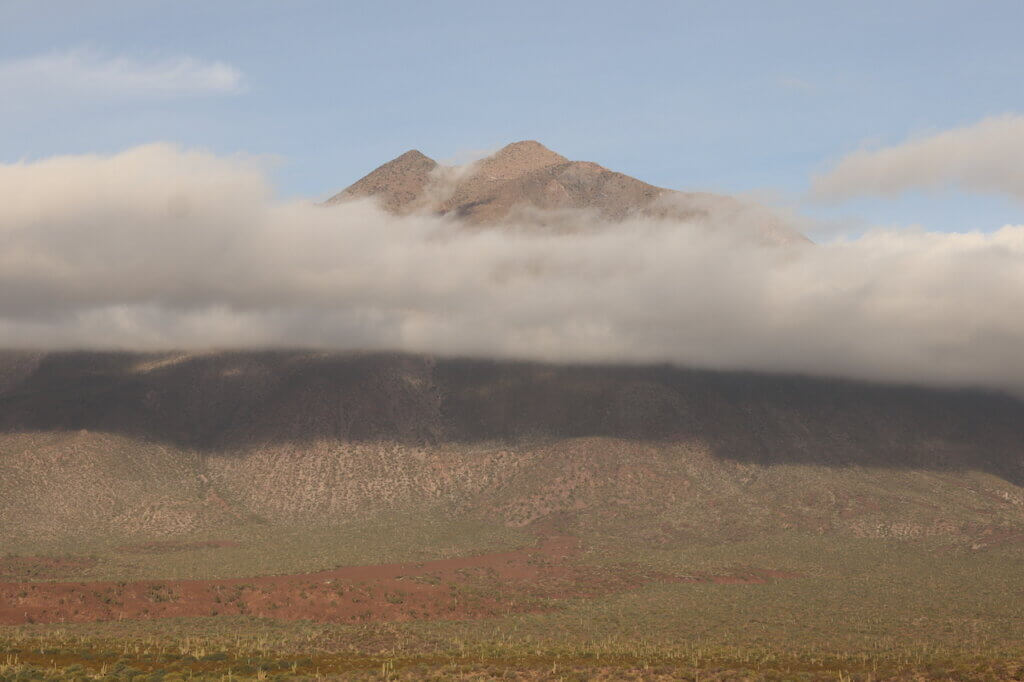
We sat in perfect silence waiting for the sunrise. The night came late under the clearest sky filled with millions of stars. Before spending the night in our humble cabins of ecological accommodation, we gather around a fire burning around us and gaze up at the sky in admiration. Unfortunately, it was not the perfect night to watch the stars because it was a full moon night. But the moon illuminated the night sky like a billion-watt bulb. We could barely make out the enormous silhouette of the three volcanoes called Las Tres Virgenes, hidden behind white clouds. We would have to wait for the sun to rise for a better view. We move to our rustic and creaky cabins. Simple but comfortable. Oscar turns on the hot water (solar-powered) before bed, so we take a quick shower before sleeping. All for just 400 MX$ (€20).
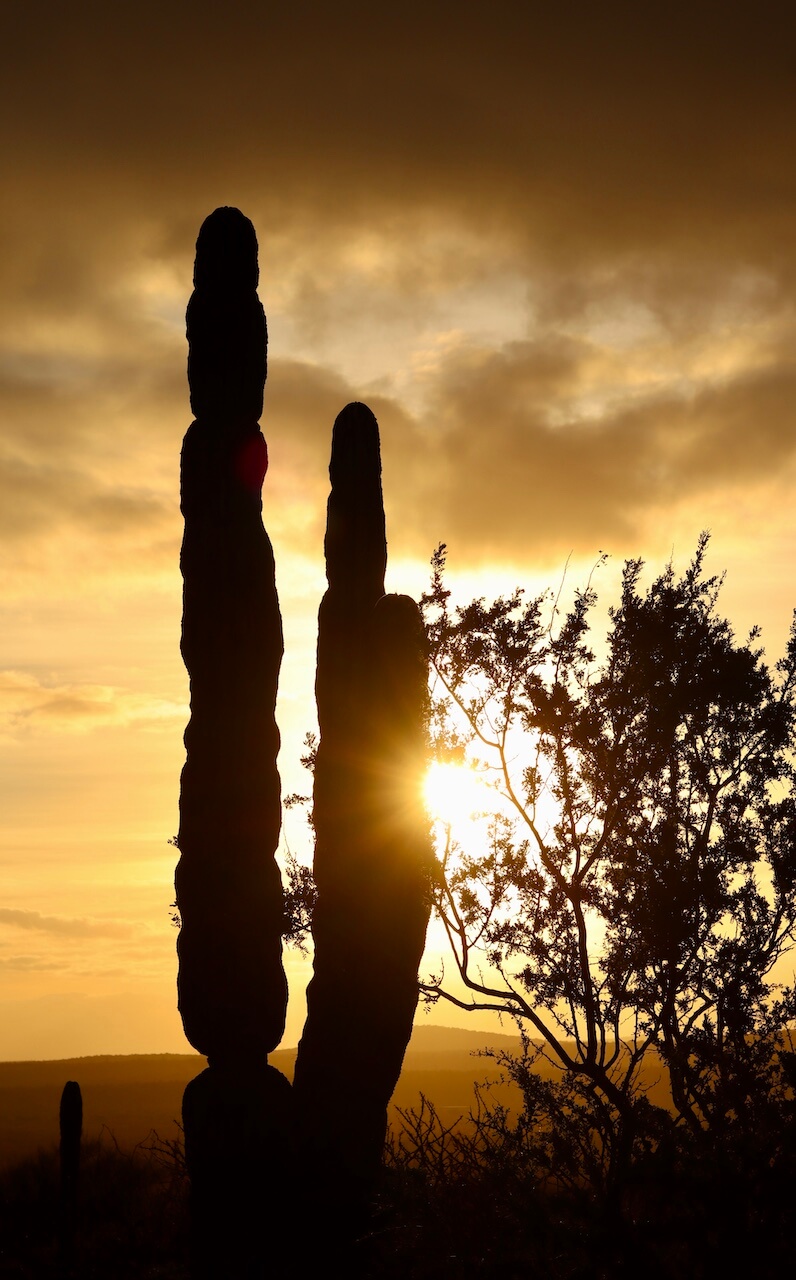
Sunrise. From the observation tower, we have a perfect 360-degree view of the landscape with no soul in sight. The vegetation here is sparse, and the main landscape is filled with many cacti at different heights. Our guide and host Oscar reminds us that cacti sometimes grow only a few millimeters and that many of the cacti in front of us are 500 years old.
As the sun rises, a beautiful kaleidoscope of red, beige, and green colors emerges before our eyes, giving the landscape an even more beautiful surreal look. The only sign of real life is a cloud of smoke from a geothermal power plant in the distance. Other than that, there is not much here.
As the sun breaks through the clouds, the enormous Las Tres Virgenes rises steeply and majestically from the desert floor, coming into full view. You can still see traces of lava from previous eruptions. It is 5 miles away from the accommodation, but due to time constraints, the next best thing was to see the hot springs in the nearby El Azufre Canyon. We get back in the vehicle and after a short 15-minute walk from the main road, we reach the viewpoint; the smell of sulfur gases reminds us that we are near an active volcano. Mexico has over 2,000 volcanoes, but only 40 are active. The Las Tres Virgenes volcano last erupted in 2001 and is still being monitored.
The end is just a beginning
It has been a few weeks since we left Baja California Sur, and I still sometimes lose my words when I think of this place. The surreal landscapes and fragile environment challenge the limits of your mind. Everything you know and are familiar with is gone, and you realize how small and insignificant we all are in the grand scheme of things.
I will let Steinbeck have a few words.
Trying to remember the Gulf is like trying to recreate a dream… There is always a desire to return in the background of our minds. If it were green and rich, we could understand the attraction, but it is harsh, hostile, and sullen. Rocky mountains pile up to the sky, and there is no fresh water. But if we live, we must return, and we do not know why.”
Steinbeck
Steinbeck, who died in 1968, could not return to Baja. Perhaps he did not need to return. Baja is such a place. A dream. A dream that continues to live inside you long after you say goodbye.
Note: This once-in-a-lifetime adventure was made possible by the travel planning platform HipTraveler and the Baja California Sur Tourism Office.
For the complete itinerary of our Baja California Sur trip, please check out the HipTraveler website.
Endless thanks to John, Swati, and Luis who brought us to Baja California, and sending love to the dream content team - Melvin, Nina, Garrett, and lastly, Sabrina.










Comments
(10 Comments)